Why Are Sustainable Clothes So Popular in 2026?

Time:2026-10-31 Author:Henry
0%

Why are sustainable clothes so popular in 2026? The answer goes beyond earthy colors or a recycled-fabric label. Shoppers are paying closer attention to how garments are made, how long they last, and what happens when they are no longer wanted. A sturdy cotton shirt, a repaired coat, or a secondhand pair of jeans can make sustainability feel practical, not abstract. Small choices matter.

Why are sustainable clothes getting popular is also a question about trust and everyday value. Many buyers want clearer information about materials, sourcing, and working conditions, while brands increasingly highlight recycled fibers, lower-impact production, and repair services. These claims are not all equal. Terms such as “eco-friendly” can be vague, and a natural fiber is not automatically the best choice in every situation. Checking product details, care instructions, and independent certifications can help, though no single label tells the whole story.

Convenience plays a part, too. Resale apps and local clothing swaps make it easier to find pre-owned pieces, while durable basics can reduce the need for frequent replacements. Yet sustainable shopping is not always affordable or simple. Some items cost more upfront, and shoppers may still struggle to verify marketing claims. That tension deserves attention. This article explores the reasons behind the growing interest, the materials and habits shaping the market, and the questions consumers can ask before buying.
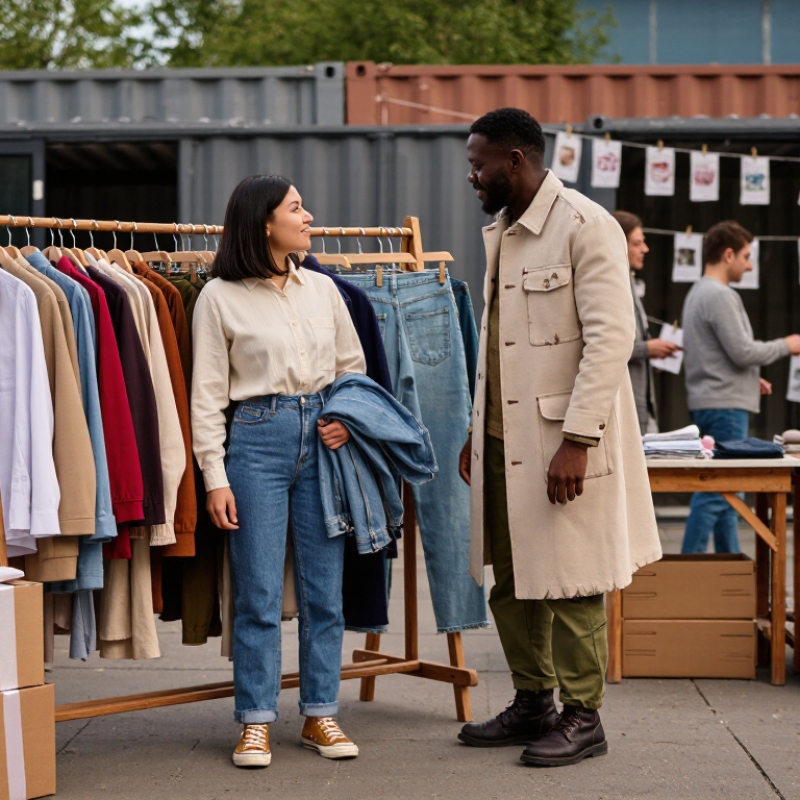
Why Are Sustainable Clothes So Popular in 2026?

What Sustainable Clothing Includes: Materials, Labor, and Product Life

In 2026, sustainable clothes attract shoppers who want useful garments with less hidden cost. The label alone, however, tells little. A soft shirt might use organic cotton, recycled fibers, or a blend designed for durability. Each choice has trade-offs. Recycled synthetics can shed tiny fibers during washing, while natural fibers still require land and water. Check the fabric details, not just the front tag.

Materials are only part of the picture. Fairer production also depends on safe workplaces, reasonable hours, and pay that supports workers. Some clothing companies share factory information; others offer broad promises with few details. That gap matters. A low-impact fabric does not prove that the people who made it were treated well. Look for clear, specific information, while remembering that supply chains can be difficult to verify completely.

Then consider how long a garment will stay in use. Strong seams, replaceable buttons, and fabric that survives repeated washing can matter more than a perfect-sounding material claim. A coat worn for years may be a better choice than a fragile “eco” item replaced each season. Still, durability is not guaranteed, and repair takes time. A loose button is easy to mend; a thinning elbow may not be. The most sustainable purchase can also be the one already hanging in your closet.

Textile Exchange: Global Fiber Production Reached 124 Million Tonnes in 2023

Textile Exchange’s Materials Market Report 2024 puts global fiber production at 124 million tonnes in 2023, up from 116 million tonnes in 2022. That is a lot of thread: enough to fill warehouses with fabric rolls, yarn, and finished garments. The report warns production could reach 160 million tonnes by 2030 if current trends continue. More clothes are being made, even as pressure grows to reduce their impact.

That scale helps explain why sustainable clothing attracts attention. Buyers and manufacturers are looking for lower-impact fibers, recycled inputs, and garments designed to last longer. Yet a “sustainable” label cannot tell the whole story. Fiber choice matters, but so do dyeing, transport, how often an item is worn, and whether it can be repaired. The label is only a starting point.

UNEP estimates that the fashion sector contributes roughly 2–8% of global greenhouse gas emissions; the range reflects differences in methods and boundaries. Progress is not simple. Recycled material can reduce demand for virgin resources, but collection and sorting remain difficult, and not every garment can be recycled into new clothing. Textile Exchange’s 124-million-tonne figure makes the central tension visible: better materials matter, but producing less waste and using clothes longer matter too.

ThredUp: Secondhand Apparel Could Reach $367 Billion by 2029

Secondhand apparel is moving from occasional bargain hunting into everyday shopping. Market projections suggest it could reach $367 billion by 2029. That is a forecast, not a guarantee. Growth will depend on available clothing, fair pricing, and shoppers’ trust in item descriptions. Still, the estimate points to resale becoming a larger part of the clothing market. When a pre-owned coat replaces a new purchase, its useful life may be extended. But resale is not automatically sustainable. Extra shipping, returns, and impulse buying can weaken its benefits. Small choices matter.

The appeal is practical as well as environmental. A sturdy wool sweater, a faded denim jacket, or a nearly new child’s coat may cost less than a similar new item. Shoppers can also find older cuts and fabrics that are harder to locate in current collections. Yet condition varies. Photos may hide loose seams, pilling, or a missing button, and a low price does not always mean good value. A little patience helps.

Tips: Check measurements, fabric labels, and close-up photos before buying. Ask about stains or repairs when details are unclear. Choose pieces you expect to wear often, and mend small flaws instead of replacing the whole garment. Try to combine orders where practical, but skip items that do not fit your real needs.

How Repair, Reuse, and Durability Make Sustainable Fashion More Accessible

A shirt does not become useless when a seam opens. A needle, matching thread, and a few quiet minutes can keep it in rotation. Repair makes sustainable fashion feel practical, not distant. Small fixes can also teach people how a garment is constructed. Still, not every tear is easy to mend, and some repairs take more time than expected. That matters when budgets and schedules are tight.

Reuse offers another accessible route. A coat passed between siblings, or trousers altered at the waist, can serve more than one person. Clothing swaps and secondhand shops may help shoppers find useful pieces without buying new, though fit and condition vary.

Durability matters too. Strong seams, washable fabrics, and replaceable buttons can reduce how often clothes need replacing. Check the stitching and care label before buying. A higher price does not always mean longer wear; habits matter, too.

I still sometimes choose convenience over repair. Sustainable choices are rarely perfect, but a patched elbow or carefully reused jacket is a tangible place to start.

How Traceability and Verified Claims Help Shoppers Assess Green Labels

Why Are Sustainable Clothes So Popular in 2026?

A green label can catch the eye, but it rarely tells the whole story. Shoppers increasingly want to know where a garment’s fibers came from and how it was made. Traceability helps connect those dots, from raw material to finished product. A useful product page might name the fiber origin, describe key processing steps, and show which facilities were involved. Specific details matter.

Look for claims that explain their scope. “Made with recycled materials” is more informative when it states the percentage and which parts of the garment it covers. Independent verification can add confidence, especially when the verifier, standard, and assessment date are clearly identified. Still, verification is not a magic stamp. A certified fiber does not automatically prove that every stage had low environmental impact.

A QR code should lead to evidence, not just another slogan. Check whether the information is current and consistent across labels and product pages. If details are missing, that is worth noticing, though it does not prove bad practice. Supply chains can be complicated, and reporting may have gaps. I still find some claims hard to compare. That’s a reason to ask better questions, not assume every green label means the same thing.

Why Are Sustainable Clothes So Popular in 2026? - How Traceability and Verified Claims Help Shoppers Assess Green Labels

What shoppers want to know Evidence to look for Verifiable fact or benchmark What it does—and does not—tell you Reference
Can I identify what the garment is made of? A fiber-composition label listing the textile fiber names and percentages. In the EU, textile products covered by the rules must show their fiber composition using permitted fiber names. The composition information is distinct from a general environmental claim. Composition helps shoppers compare materials, but by itself does not prove that a fiber was produced with lower environmental impact. EU Textile Fibre Names and Labelling Regulation
Does an “organic” claim have a defined threshold? The full certification label, its grade, and a way to verify the certified product or supply chain. Under the Global Organic Textile Standard (GOTS) label grades, “organic” requires at least 95% certified organic fibers; “made with organic materials” requires at least 70%. The threshold applies to fiber content under the standard. A shopper should still check the product-specific label and certification details; the word “organic” alone is not proof of certification. GOTS standard overview
Does a chemical-safety label verify sustainability? Read the scope of the test or certification rather than relying on a leaf symbol or broad “eco” wording. OEKO-TEX STANDARD 100 tests textile articles for harmful substances against its test criteria. A harmful-substance test can provide information about product safety, but it is not, on its own, proof of organic content, low carbon emissions, or responsible production across the supply chain. STANDARD 100 scope
Is there an environmental label with product-level criteria? Check which product category and environmental impacts the label covers. The EU Ecolabel criteria for textiles address multiple aspects, including restricted hazardous substances, pollution, and product quality or durability requirements. A multi-criteria label can offer broader evidence than a single-material claim, but shoppers should consult the criteria to understand the scope and any exclusions. EU Ecolabel textiles
Can a claim be followed back through the supply chain? Look for specific product information about materials and production stages, plus certification or documentation that supports the claim. Traceability is the ability to follow a product or material through relevant supply-chain stages. A QR code or online product page is useful only when it links to clear, relevant information. More information can make a claim easier to assess, but a QR code alone does not verify the accuracy of the information it displays. OECD responsible business conduct resources
Will product-level digital information become more important? Watch for a digital product record that provides structured information about a product, such as materials and relevant sustainability details. The EU Ecodesign for Sustainable Products Regulation established a framework for Digital Product Passports. Textiles and apparel were identified as a priority product group in the EU’s 2025–2030 working plan. The framework and priority designation do not mean every textile product already has a mandatory passport; product-specific requirements depend on subsequent EU rules. Ecodesign for Sustainable Products Regulation; 2025–2030 working plan
Is “more sustainable” specific enough to evaluate? Look for a clear comparison, a defined product attribute, and accessible evidence supporting the wording. Claims such as “recycled,” “organic,” or “lower impact” describe different things and are not interchangeable. A useful claim identifies what is measured and what product or life-cycle stage it covers. Specific, verifiable claims help shoppers compare like with like. Vague claims do not establish how much better a product is or what evidence was used. OECD responsible business conduct resources

How to use this table: Treat labels and digital product information as evidence with a defined scope. Verify what is certified or measured, which product it applies to, and what the claim leaves out.

FAQS

How large could the secondhand apparel market become by 2029?

It could reach $367 billion, according to a forecast. This is an estimate, not a guarantee.

Why do shoppers choose pre-owned clothing?

It may cost less and offer older styles or fabrics. A wool sweater or child’s coat can be a useful find.

How can I check an item’s condition before buying?

Review measurements, fabric labels, and close-up photos. Ask about stains, loose seams, or missing buttons if details are unclear.

Is secondhand shopping always better for the environment?

Not automatically. Extra shipping, returns, and impulse purchases can reduce its benefits.

What small repairs can keep clothes in use?

A needle and matching thread can fix some open seams. Replacing a button or patching an elbow may also help.

How can clothing be reused by more than one person?

A coat can pass between siblings, while trousers may be altered at the waist. Swaps and secondhand shops offer other options.

What details can suggest that a garment may last?

Look for strong seams, washable fabric, and replaceable buttons. A higher price alone does not ensure longer wear.

How can I avoid buying something I will not use?

Choose pieces that fit your actual needs and that you expect to wear often. Patience helps.

Is repairing every damaged garment practical?

No. Some tears take too much time or are difficult to mend. I still sometimes choose convenience over repair.

Conclusion

Why are sustainable clothes getting popular? More shoppers are considering how clothing is made, how long it lasts, and what happens to it when it is no longer wanted. Sustainable clothing can involve lower-impact materials, fairer labor practices, and designs intended for extended use. The scale of textile production—124 million tonnes of fibers globally in 2023—has also drawn attention to the resources and waste associated with fashion.

Interest in secondhand apparel, projected to reach $367 billion by 2029, reflects a growing appetite for reuse alongside buying new. Repairing garments, choosing durable pieces, and passing clothes on can make more responsible choices practical and accessible. Clear traceability and carefully verified environmental claims can also help shoppers distinguish meaningful information from vague green labels. Together, these changes make sustainability less about a single purchase and more about thoughtful choices throughout a garment’s life.

Henry

Henry

Henry is a dedicated marketing professional with a profound expertise in the company's offerings. With years of experience in the industry, he possesses an impressive understanding of the market dynamics and consumer behaviors that drive success. Henry is committed to sharing his insights through......