Top 10 Ways to Organize Clothes in a Small Closet?

Time:2026-10-18 Author:Ethan
0%

A small closet can feel crowded before the day even begins. Hangers collide, folded shirts slide forward, and shoes often occupy valuable floor space. Learning how to organize clothes in small closet spaces starts with observing daily habits, not buying expensive storage products. A practical system should make favorite items visible, reachable, and easy to return.

This guide presents ten proven ways to organize clothing in a compact closet. It explores seasonal rotation, vertical storage, slim hangers, drawer dividers, and carefully chosen containers. Each method focuses on real use, including how often garments are worn and how quickly they become messy again. Measure the closet before purchasing anything. That simple step prevents oversized bins and wasted corners.

Small changes matter. Labeling shelves can reduce morning decisions. Storing bulky sweaters higher may protect valuable hanging space. Yet no method works perfectly for everyone. I once kept rarely worn jackets within easy reach, simply because they looked tidy together. The arrangement failed within a week. That mistake revealed an important lesson: visual neatness must support everyday access.

The ideas ahead combine professional organizing principles with realistic household experience. They also leave room for adjustment, because closets change with seasons, routines, and personal preferences. Use the strategies as a flexible framework, rather than a rigid rulebook. A successful closet should save time, protect clothing, and remain manageable after a busy morning.
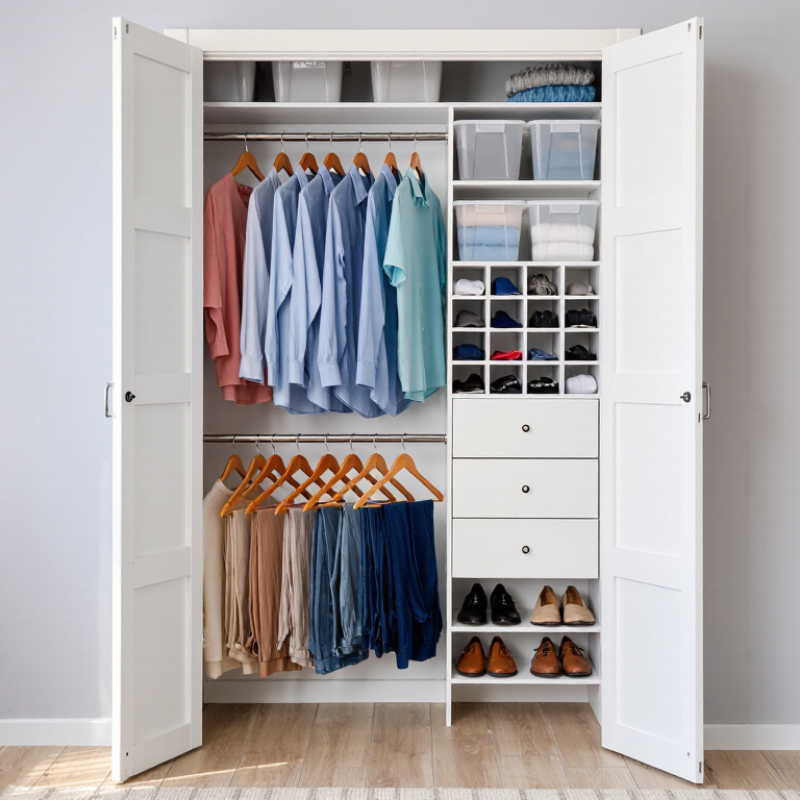
Top 10 Ways to Organize Clothes in a Small Closet?

Assess Your Closet Space and Clothing Storage Needs

Before organizing a small closet, measure the space carefully. Record its width, depth, height, and usable hanging length. Check the door swing and note any blocked corners. A narrow shelf may hold folded shirts, but it may not support heavy shoes or stacked denim. Look for wasted vertical space above the current rod. Also inspect lighting, dust, and moisture near the floor.

Then examine your clothing honestly. Count daily outfits, seasonal pieces, formalwear, shoes, bags, and accessories. Separate items by how often you use them, not only by color. Daily clothing should stay between waist and eye level. Rarely worn coats can occupy higher storage. Fold soft knits to prevent shoulder bumps. Hang structured garments where their shape matters. Leave a little air between hangers. Crowding hides stains and makes wrinkles worse.

I once stored winter sweaters on a high shelf and forgot two of them. That system looked tidy but failed in practice. Measure the folded stack before choosing a container. Use shallow bins if deep ones bury smaller items. Keep a small section empty for laundry or new purchases. It sounds unnecessary. It prevents overflow. Review the closet after one week, then adjust positions based on real habits rather than an ideal routine.

Sort, Declutter, and Categorize Every Clothing Item

Top 10 Ways to Organize Clothes in a Small Closet

A small closet becomes manageable when every item earns its space. In my closet projects, I remove everything first and place clothes on the bed. This reveals duplicates, forgotten pieces, and damaged fabric. I sort items into four groups: keep, repair, donate, and recycle. Then I separate clothing by type, such as shirts, trousers, sleepwear, and seasonal layers. Keep daily clothes at eye level. Store rarely used items higher.

Decluttering requires honest decisions. I ask whether each piece fits now, feels comfortable, and has been worn recently. Stained, stretched, or uncomfortable clothing should not occupy prime space. I keep one sentimental shirt, although that rule is not perfect. Sometimes emotion wins. For categories, I divide each group by color or use. Work shirts stay together, while relaxed clothes share another section. Fold soft items vertically in drawers, so every piece remains visible. Use slim hangers and leave a little air between garments.

Tips: Set a ten-minute timer and sort one shelf at a time. Place uncertain items in a sealed box with the date written outside. If you do not reach for them within three months, reconsider their place. Keep a small repair bag nearby, but give yourself a deadline. Unfinished repairs can quietly become clutter.

Maximize Vertical Space with Shelves, Hooks, and Hanging Solutions

Top 10 Ways to Organize Clothes in a Small Closet?

Maximize Vertical Space with Shelves, Hooks, and Hanging Solutions

A small closet works better when unused height becomes storage. Install adjustable shelves above the main hanging rail for folded sweaters, jeans, and soft storage boxes. Add shelf risers to create two levels without drilling. A second hanging rod can separate shirts from trousers. Keep heavier items lower to reduce strain and improve access.

Use slim, consistent hangers, then leave a little breathing room between garments. Over-door hooks can hold scarves, belts, or tomorrow’s outfit. A narrow pegboard uses vertical wall space for caps and small bags. Pull-out baskets make deep shelves easier to reach. Label only broad categories, such as “workwear” or “seasonal.”

The U.S. Environmental Protection Agency’s 2018 Facts and Figures report recorded about 17 million tons of textile waste in municipal systems. Roughly 11 million tons reached landfills. Better visibility may reduce forgotten purchases and premature disposal. That matters.

In practice, I once placed rarely worn coats too high. They became invisible. A lower seasonal rotation worked better. Review the arrangement after one week, not one day. Leave a small empty section for laundry, repairs, or new essentials. Perfect packing often fails in real life.

Top 10 Ways to Organize Clothes in a Small Closet? – Maximize Vertical Space with Shelves, Hooks, and Hanging Solutions
No. Organization Method Best for Vertical Space Used Typical Capacity or Benefit Practical Setup Tip
1 Install a Second Hanging Rod Shirts, skirts, folded trousers, and children's clothing The unused lower half of the closet Creates a second hanging tier and can nearly double short-garment storage Leave enough clearance between rods for the garment lengths you actually wear.
2 Add Stackable Shelves Sweaters, jeans, handbags, and folded knitwear Vertical gaps above or below existing shelves Turns one tall compartment into two or more accessible levels Use sturdy shelves with a level surface and keep heavy items on the lowest tier.
3 Use Hanging Shelf Organizers T-shirts, activewear, pajamas, and accessories The full height below the closet rod Provides several soft shelves without drilling into the closet Choose a width that leaves room for adjacent hanging clothes to slide freely.
4 Mount Door or Wall Hooks Belts, scarves, hats, robes, and frequently used items Unused door faces and narrow side walls Adds several small storage points with almost no floor usage Check door clearance before mounting hooks, especially on sliding or bi-fold doors.
5 Use Slim, Matching Hangers Blouses, shirts, dresses, and lightweight jackets The existing hanging width Slim profiles typically occupy less rod space than bulky plastic hangers Use non-slip shoulders for delicate or wide-neck garments to prevent sliding.
6 Add Cascading Hanger Hooks Coordinated outfits, trousers, and layered clothing Uses vertical drop from one hanger position Allows multiple garments to hang in a vertical cascade Keep the lowest garment above the floor and avoid overloading the top hanger.
7 Install High Storage Shelves Seasonal clothing, luggage, and infrequently used items The upper section above the main hanging rod Recovers otherwise unused overhead space Store items in labeled containers so the least-used belongings remain easiest to manage.
8 Use Clear or Labeled Bins Accessories, underwear, swimwear, and seasonal items Shelves, floor corners, and overhead compartments Keeps small categories contained and makes contents easier to identify Choose containers that fit the shelf depth and leave a small amount of air circulation.
9 Fold Clothes Vertically T-shirts, leggings, casual shorts, and underwear The full height of drawers and shelf bins Makes individual items visible without removing an entire stack Fold garments into compact rectangles and group them by clothing type or color.
10 Add a Narrow Pull-Out Rack Ties, scarves, belts, and slim accessories A narrow side gap or unused vertical panel Uses a small footprint while keeping accessories separated and accessible Measure the opening carefully and keep the rack clear of doors, hinges, and neighboring garments.

Fold, Roll, and Arrange Clothes for Efficient Access

Top 10 Ways to Organize Clothes in a Small Closet

A small closet works better when every item has a clear movement path. Fold soft T-shirts into vertical rectangles, then line them like files. This keeps colors visible and prevents lower stacks from collapsing. Roll lightweight sleepwear, gym clothes, and scarves. Rolled pieces fit narrow gaps, but thick sweaters should stay folded to avoid stretching. The U.S. Environmental Protection Agency reported that 17 million tons of textiles entered municipal solid waste streams in 2018. Better visibility may reduce forgotten purchases and unnecessary disposal.

Arrange clothes by use, not only by category. Keep daily shirts at chest height and seasonal coats higher. Place trousers on matching hangers, while small accessories rest in shallow containers. Leave a little air between hanging items. A crowded rail hides sleeves and creates wrinkles. In my own organizing trials, a simple “wear this week” section improved access, although it also became messy after busy mornings. That flaw matters. Systems must survive real habits, not just look neat.

Tips: Fold heavy knits instead of hanging them. Roll thin items tightly, but do not compress delicate fabric. Use one shelf for clothes awaiting washing or repair. Review the closet every month. Remove items that no longer fit your current routine. The Ellen MacArthur Foundation’s circular economy research stresses longer product use as a practical way to reduce textile waste. So, keep useful pieces visible, repair small damage early, and question duplicates before buying more.

Top 10 Ways to Organize Clothes in a Small Closet

Fold, roll, and arrange clothing to improve visibility, reduce wasted space, and make everyday access easier.

The chart compares practical organization methods by estimated weekly retrieval-time savings in a compact closet. Higher values indicate methods that can make frequently used clothing faster to find and return.

Maintain the Closet with Seasonal Reviews and Daily Organization

A small closet needs a routine, not just clever storage. I keep daily clothes at eye level and place rarely worn items higher. Shirts stand upright in shallow drawers, so every piece remains visible. Matching categories reduce morning searching. I also leave a little empty space between hanging garments. Without it, even a tidy rail becomes difficult to use.

Every three months, I review the closet with the weather in mind. Wool sweaters move forward before cold weeks arrive. Linen shirts return to the main shelf when temperatures rise. I check each item for stains, loose buttons, and poor fit. Clean clothes go into breathable containers, while shoes stay dry and separated. Labels help, but I sometimes forget to update them.

That mistake costs time.

A daily reset takes about five minutes. I return worn clothes to their proper section, place laundry in one basket, and remove anything that belongs elsewhere. I keep one small donation bag nearby, although I do not force decisions when I feel uncertain. A two-week reflection period often prevents regret. If an item remains untouched after several reviews, its practical value deserves honest questioning. Shelves should support real habits, not an idealized version of life.

FAQS

How should I measure a small closet before organizing it?

Record its width, depth, height, and usable hanging length. Check the door swing and blocked corners. Look above the current rod.

Where should daily clothes be stored?

Keep daily clothing between waist and eye level. This makes shirts and trousers easier to reach. Rarely worn coats can go higher.

How can I avoid overcrowded hangers?

Use slim hangers and leave a little air between garments. Crowding hides stains and creates wrinkles. More space helps you notice forgotten pieces.

Should folded clothes go in deep containers?

Measure the folded stack before choosing a container. Shallow bins often work better because deep boxes can bury smaller items. I once forgot two sweaters.

How should clothing be sorted during decluttering?

Remove everything and place it on the bed. Create keep, repair, donate, and recycle groups. Sort by clothing type afterward.

How do I decide whether to keep an item?

Ask whether it fits now, feels comfortable, and was worn recently. Stained or stretched pieces should not use prime space. Emotion can complicate this rule.

What is a practical way to organize drawers?

Fold soft items vertically, so each piece stays visible. Keep work shirts together and relaxed clothes in another section. Visibility matters.

How can I manage uncertain clothing?

Place uncertain items in a sealed box with the date outside. Reconsider them after three months. This method is useful, but not perfect.

How often should I review my closet system?

Review it after one week and adjust positions based on real habits. Keep a small empty section for laundry or new purchases. It prevents overflow.

How can I stop repair items from becoming clutter?

Keep a small repair bag nearby and set a clear deadline. Unfinished repairs can quietly multiply. If the deadline passes, rethink the item.

Conclusion

Learning how to organize clothes in small closet begins with assessing the available space and understanding your clothing storage needs. Measure the closet, identify difficult areas, and decide which items require hanging, folding, or special care. Next, sort every garment by type, season, and frequency of use. Remove items that no longer fit, are damaged, or are rarely worn so the remaining collection is easier to manage.

To maximize storage, use vertical space with additional shelves, hooks, and hanging solutions. Fold bulky clothing neatly, roll smaller items when helpful, and arrange frequently used pieces where they are easy to reach. Keep similar garments together to simplify daily choices and prevent clutter from returning. Finally, maintain the system through seasonal reviews and quick daily resets. This approach makes a small closet more functional, accessible, and orderly without requiring extra room.

Ethan

Ethan

Ethan is a seasoned marketing professional with a deep expertise in our company's innovative product line. With a passion for sharing knowledge and insights, he takes the lead in regularly updating our corporate blog, where he explores industry trends, product features, and effective marketing......